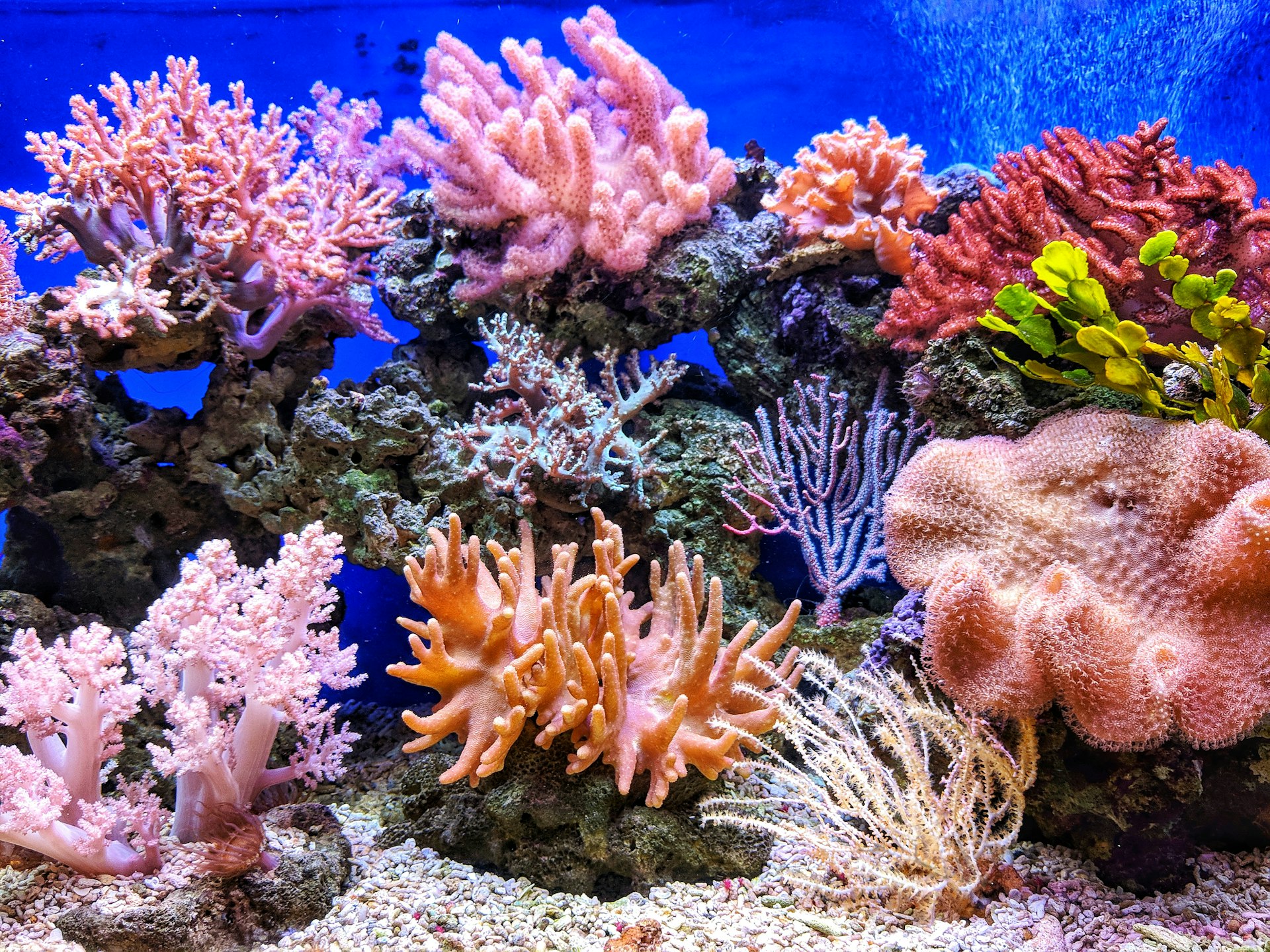
Coral reef
🌊 12 Ecosystem Types

Aquatic & Marine Biomes

Coral reefs, kelp forests, mangroves, wetlands, and ocean zones. The blue planet's life support systems.

Live Data • March 28, 2026

📊 Global Aquatic Health Status

Real-time • March 28, 2026
Coral Reef Health
38%
Globally healthy
↓ 14% loss since 2009
Mangrove Coverage
139,600
km² remaining
↓ -0.13% annual loss
Ocean Dead Zones
700+
low-oxygen zones
↑ 4x since 1950
Wetland Extent
8.5M
km² (64% of 1900)
↓ Lost 35% globally
Kelp Forest Decline
-50%
in some regions
Urchin barrens expanding
Seagrass Meadows
300,000
km² remaining
↓ -7% annual loss

🌊 Ocean Facts & Statistics

71%
Earth's Surface
361 million km²
97%
of Earth's Water
1.335 billion km³
3,688m
Average Depth
Max: 10,994m (Mariana)
50%+
Earth's Oxygen
From phytoplankton
📊 Detailed Ocean Statistics

Ocean Basins

Pacific 165.2M km²
Atlantic 106.5M km²
Indian 70.6M km²
Southern 21.9M km²
Arctic 15.6M km²

Marine Biodiversity

Known species ~240,000
Estimated total 2.2M species
Fish species ~35,000
Coral species ~6,000
Marine mammals ~130 species

Ocean Chemistry (2026)

Average pH 8.07
Average salinity 35 g/kg
Surface temp (avg) 17°C
Heat absorbed 90% of warming
CO₂ absorbed 30% of emissions

🔵 Ocean Depth Zones

Click any zone for detailed information
☀️ Epipelagic (Sunlight Zone)
0-200m • Photosynthesis occurs • 90% of marine life
200m
Maximum Depth
18-30°C
Temperature
100%
Light Available
7-8 mg/L
Oxygen
Key Features
  • All photosynthesis occurs here - phytoplankton produce 50%+ of oxygen
  • Most productive ocean zone - base of food web
  • All coral reefs confined to this zone
  • Temperature varies by latitude: 2°C (poles) to 30°C (tropics)
  • Where most commercial fishing occurs
  • Supports whales, dolphins, tuna, sharks, sea turtles
Major Threats
  • Overfishing - 90% of large fish stocks depleted
  • Plastic pollution - 5 trillion pieces floating
  • Ocean warming - 0.13°C per decade since 1971
  • Acidification - pH down 0.12 units
🌙 Mesopelagic (Twilight Zone)
200-1000m • Dim light • Bioluminescence common
200-1000m
Depth Range
5-15°C
Temperature
1%
Light Penetration
90%
Use bioluminescence
Key Features
  • Largest biomass zone - 10 billion tons of fish (mostly lanternfish)
  • Daily vertical migration: animals rise at night to feed, sink during day
  • Largest migration on Earth (by biomass) happens here daily
  • Bioluminescence used for hunting, camouflage, communication
  • Counter-illumination: fish light up belly to match dim light from above
Inhabitants
  • Lanternfish (most abundant vertebrate on Earth)
  • Squid (including giant squid prey)
  • Hatchetfish (flat, bioluminescent)
  • Jellies and siphonophores
🌑 Bathypelagic (Midnight Zone)
1000-4000m • No light • High pressure • 4°C
1000-4000m
Depth Range
2-4°C
Temperature
0%
Sunlight
100-400 atm
Pressure
Key Features
  • Complete darkness - no sunlight penetrates
  • Extreme pressure - 100x surface atmospheric pressure
  • Constant near-freezing temperature year-round
  • Food scarce - depends on "marine snow" from above
  • Animals have slow metabolism, long lifespans
Adaptations
  • Large mouths and stomachs (eat anything available)
  • Anglerfish lure with bioluminescent bacteria
  • Tiny eyes or no eyes (useless in darkness)
  • Soft bodies, no swim bladders (pressure)
  • Black or red coloration (invisible in darkness)
⬛ Abyssopelagic (Abyssal Zone)
4000-6000m • Near freezing • Extreme pressure • Vast plains
4000-6000m
Depth Range
0-3°C
Temperature
400-600 atm
Pressure
54%
of ocean floor
Key Features
  • Abyssal plains - flattest places on Earth
  • Covered in fine sediment (ooze) from dead plankton
  • Extremely sparse life - desert of the ocean
  • Mainly scavengers and detritivores
  • Hydrothermal vents create oases of life
Life Forms
  • Sea cucumbers (vacuum sediment)
  • Tripod fish (stand on fins, feel for food)
  • Amphipods (scavengers)
  • Bacteria (most abundant)
  • Deep-sea sharks (slow-moving)
🕳️ Hadopelagic (Hadal Zone / Trenches)
6000-11000m • Extreme life • Deepest ocean
6000-11000m
Depth Range
1-4°C
Temperature
1100 atm
Pressure (max)
27
Known trenches
Major Ocean Trenches
  • Mariana Trench: 10,994m (Challenger Deep) - deepest point
  • Tonga Trench: 10,882m
  • Philippine Trench: 10,545m
  • Kermadec Trench: 10,047m
  • Puerto Rico Trench: 8,376m (Atlantic's deepest)
Extreme Discoveries
  • Snailfish found at 8,178m (deepest fish ever recorded)
  • Amphipods at 10,908m in Mariana Trench
  • Plastic bags found at bottom of Mariana Trench
  • Unique bacteria adapted to extreme pressure
  • Only 4 humans have reached Challenger Deep

🐠 Marine Ecosystems

Click any ecosystem for detailed information
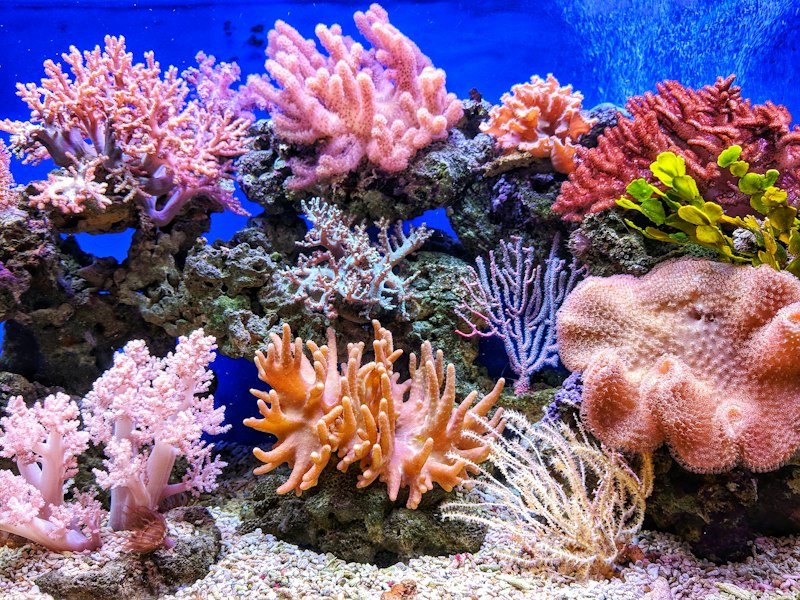
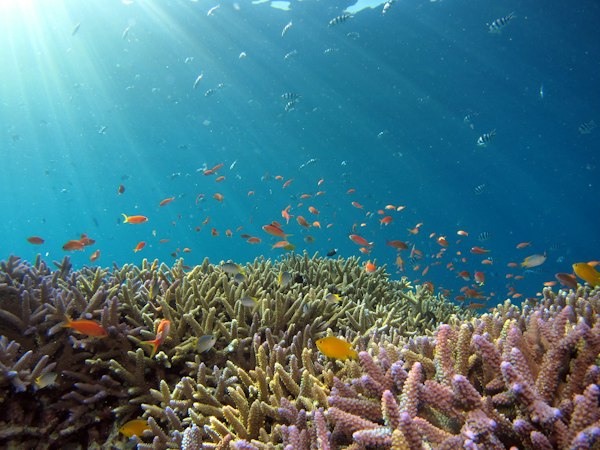
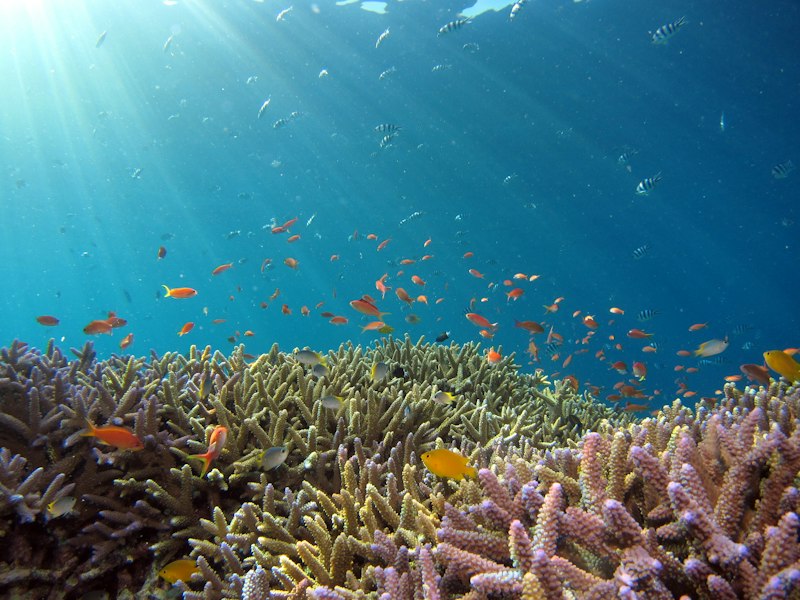
Coral reef ecosystem
🪸

Coral Reefs

"Rainforests of the sea"
25%
of marine species
<1%
of ocean floor
$375B
annual value

Requirements

  • Water temp: 23-29°C (optimal)
  • Clear water (light needed)
  • Salinity: 32-42 ppt
  • Shallow depth (<50m)

Major Reef Systems

  • 🇦🇺 Great Barrier Reef (344,400 km²)
  • 🇧🇿 Mesoamerican Reef
  • 🇮🇩 Coral Triangle (most diverse)
  • 🇲🇻 Maldives atolls

⚠️ Bleaching Crisis

When stressed (heat), corals expel symbiotic algae → turn white → die. 2016-17: 50% of Great Barrier Reef bleached. +1.5°C could kill 70-90%.
Coral Biology

  • Corals are animals (cnidarians), not plants
  • Symbiosis with zooxanthellae algae provides 90% of energy
  • Hard corals secrete calcium carbonate skeletons
  • Grow 0.3-2 cm/year (very slow)
  • Reproduce sexually (spawning events) and asexually (budding)
  • Some corals live 4,000+ years

Reef Types

  • Fringing reefs: Grow along shorelines
  • Barrier reefs: Parallel to shore with lagoon
  • Atolls: Ring shape around lagoon (former volcanoes)
  • Patch reefs: Small, isolated reefs

Threats & Status (2026)

CRITICALLY ENDANGERED
Bleached (2023-2024) 42% globally
Lost since 1950 50%
Great Barrier Reef Fair condition
Caribbean 80% lost
2100 projection 99% at risk
Recovery time 10-15 years
38%
Global reef health index
Mangrove forest
🌳

Mangroves

Coastal guardians
139,600
km² worldwide
75%
fish nursery
4x
carbon of forests

Ecosystem Services

  • 🌊 Storm surge protection
  • 🐟 Nursery for fish species
  • 🌍 Carbon sequestration (blue carbon)
  • 🏠 Coastal erosion prevention
  • 💧 Water filtration

Threats

Lost 35% since 1980s. Shrimp farming, coastal development, pollution. One of most threatened ecosystems globally.
Adaptations

  • Salt filtration: Roots filter 90% of salt from seawater
  • Aerial roots: Prop roots and pneumatophores for oxygen
  • Viviparous seeds: Seeds germinate while on tree (propagules)
  • Tidal tolerance: Survive daily flooding
  • Waxy leaves: Reduce water loss

Major Mangrove Species

  • Red mangrove: Most seaward, prop roots
  • Black mangrove: Pneumatophores (breathing roots)
  • White mangrove: Furthest inland
  • ~80 species globally

Economic Value

Fisheries support $1.6B annually
Storm protection $65B value
People protected 18M people
Carbon stored 22.8 Gt
Reduction value $42B/year
Tourism income $1.4B
65%
Remaining since 1980 baseline
Kelp forest
🌿

Kelp Forests

Underwater cathedrals

Characteristics

  • Giant kelp grows 60cm/day (fastest plant)
  • Can reach 45m tall
  • Cold, nutrient-rich waters (6-14°C)
  • Supports 800+ species

Locations

  • California coast
  • Southern Australia/Tasmania
  • Chile/South Africa
  • Northern Europe

Sea Urchin Problem

Without sea otters/predators, urchin populations explode and create "urchin barrens" - destroying kelp forests.
Kelp Forest Structure

  • Canopy: Surface-floating fronds, light filtering
  • Mid-story: Mid-water column kelp species
  • Understory: Smaller kelps, red algae
  • Holdfast: Root-like anchor (not true roots)
  • Stipe: Stem-like structure
  • Pneumatocysts: Gas-filled floats

Key Species

  • Sea otters: Keystone predator (eat urchins)
  • Sea urchins: Graze on kelp
  • Abalone: Grazer, commercially valuable
  • Fish: Rockfish, kelp bass, surfperch
  • Seals/sea lions: Hunt in forests

Major Declines (2026)

RAPID DECLINE
California (since 2014) -95%
Tasmania -90% (east coast)
Urchin barrens Expanding rapidly
Marine heat waves Primary cause
Recovery potential If otters return
Economic loss $13M+ (fisheries)
Seagrass meadow
🌾

Seagrass Meadows

Carbon capture champions

Blue Carbon

Seagrass captures carbon 35x faster than tropical rainforests. Stores carbon for millennia in sediments. Critical for dugongs, sea turtles, and countless fish.

Status

Losing 7% per year. Pollution, dredging, boat anchors. 29% already lost globally.

Seagrass Facts

  • Only flowering plants in ocean (not algae)
  • ~60 species worldwide
  • Grow in shallow, sheltered coastal waters
  • True roots, stems, leaves
  • Reproduce via rhizomes and seeds
  • Form underwater meadows

Ecosystem Services

  • Carbon: 10% of ocean carbon burial
  • Nursery: 20% of fisheries depend on them
  • Water quality: Filter sediment, nutrients
  • Stabilization: Roots hold sediment
  • Oxygen: Produce via photosynthesis

Global Coverage (2026)

Current extent ~300,000 km²
Historical extent ~420,000 km²
Loss rate -7% annually
Carbon released 1.5 Gt when lost
Species dependent 1,000+
Economic value $1.9T annually
71%
Remaining coverage (historical baseline)

💧 Freshwater Ecosystems

Wetland ecosystem
🏞️

Wetlands

Earth's kidneys

Types

  • Marshes: Grasses, sedges
  • Swamps: Trees (cypress, mangroves)
  • Bogs: Acidic, peat-forming
  • Fens: Alkaline, groundwater-fed

Famous Wetlands

  • 🇺🇸 Everglades
  • 🇧🇷 Pantanal (world's largest)
  • 🇧🇼 Okavango Delta
  • 🇮🇶 Mesopotamian Marshes

Ecosystem Services

  • Water filtration: Remove pollutants, sediments
  • Flood control: Absorb excess water like sponges
  • Groundwater recharge: Replenish aquifers
  • Carbon storage: Peat stores ancient carbon
  • Biodiversity: 40% of species depend on wetlands
64% LOST SINCE 1900
Remaining area 8.5M km²
Loss rate 3x faster than forests
People dependent 1 billion+
Mountain lake
🏔️

Lakes

Freshwater reserves

Lake Zones

  • Littoral: Near shore, plants rooted
  • Limnetic: Open water, light penetrates
  • Profundal: Deep, dark, cold
  • Benthic: Bottom sediments

Notable Lakes

  • 🇷🇺 Baikal: Oldest, deepest, 20% freshwater
  • 🇺🇸🇨🇦 Great Lakes: 21% surface freshwater
  • 🇹🇿 Tanganyika: 2nd deepest

Lake Types

  • Oligotrophic: Low nutrients, clear, deep (Baikal)
  • Mesotrophic: Moderate nutrients, intermediate
  • Eutrophic: High nutrients, algae blooms, shallow
  • Tectonic: Formed by Earth movements
  • Glacial: Carved by glaciers (most common)
  • Crater: Volcanic origin

Largest Lakes

Caspian Sea 371,000 km²
Lake Superior 82,100 km²
Lake Victoria 68,800 km²
Lake Baikal (volume) 23,600 km³
River
🌊

Rivers & Streams

Flowing ecosystems

River Continuum

  • Headwaters: Cold, fast, high oxygen
  • Middle: Wider, warmer, more diverse
  • Lower: Slow, warm, sediment-rich
  • Delta: Nutrient-rich, highly productive

Major Rivers

  • 🌎 Amazon: 20% of river discharge
  • 🌍 Nile: Longest (6,650 km)
  • 🌏 Yangtze: Most dammed

River Statistics

Amazon discharge 209,000 m³/s
Nile length 6,650 km
Yangtze watershed 1.8M km²
Global dams 58,000+

Threats (2026)

  • 46% of major rivers heavily polluted
  • 80% of large river systems dammed/fragmented
  • Freshwater species declining 83% since 1970
  • Over-extraction for agriculture (70% of freshwater use)

🌟 Special & Extreme Ecosystems

Estuary
🌊

Estuaries

Where rivers meet sea

Transition zones with brackish water. Extremely productive - nurseries for 75% of commercial fish. Chesapeake Bay, San Francisco Bay, Thames Estuary are famous examples.

Characteristics

  • Tidal influence
  • Salinity gradient (0-35 ppt)
  • High nutrient input
  • Mudflats, salt marshes

Estuary Types

  • Coastal plain: Flooded river valleys (Chesapeake)
  • Tectonic: Formed by faulting (San Francisco)
  • Bar-built: Sandbars separate from ocean
  • Fjord: Glacially carved (Norway, Alaska)

Productivity

Primary productivity 1,500 g/m²/year
Fish nursery function 75% of catch
Economic value $77,000/ha/yr
Deep sea
🌋

Hydrothermal Vents

Deep sea oases

Superheated water (400°C) from volcanic activity. Chemosynthesis instead of photosynthesis. Giant tube worms, blind shrimp, unique bacteria. May be where life originated.

Black Smokers

Mineral-rich water creates chimney structures. Can reach 10+ meters tall. Extreme pressure (250+ atm).
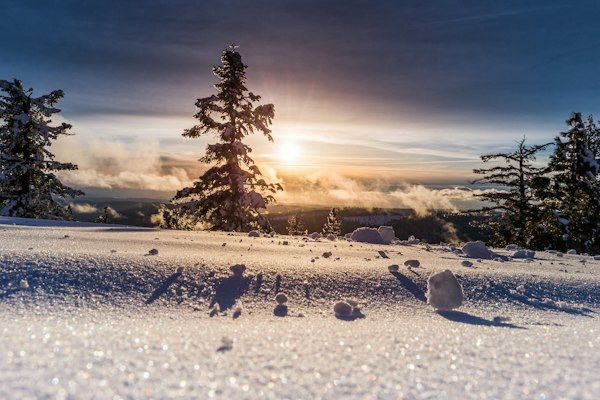
Vent Types

  • Black smokers: 350°C+, sulfide-rich, black plumes
  • White smokers: 200-300°C, lighter minerals
  • Lost City vents: 40-90°C, alkaline, carbonate towers

Unique Life

  • Giant tube worms: 2.4m long, no digestive system
  • Vent crabs: Yeti crab farms bacteria on claws
  • Pompeii worm: Survives 80°C water
  • Chemosynthetic bacteria: Base of food web
Polar ice
🧊

Polar Seas

Cold but productive

Antarctic waters are most productive on Earth. Cold water holds more oxygen. Krill (5-6 billion tonnes) feed whales, penguins, seals.

Key Species

  • 🦐 Antarctic krill (keystone species)
  • 🐋 Whales (migrate to feed)
  • 🐧 Penguins (Antarctic)
  • 🐻‍❄️ Polar bears (Arctic)

Why So Productive?

  • Cold water holds more oxygen and CO₂
  • Nutrient-rich upwelling
  • 24-hour summer sunlight
  • Seasonal ice melt releases nutrients

Climate Change Impacts (2026)

Arctic ice loss -13% per decade
Krill biomass decline -80% (some areas)
Polar bear status Vulnerable
⚖️ Freshwater vs Marine Ecosystems

💧 Freshwater

% of Earth's water 2.5%
% as liquid surface water 0.3%
Salinity <0.5 g/L
Species ~100,000
% of fish species 40%

🌊 Marine

% of Earth's water 97%
% of biosphere 99.5%
Average salinity 35 g/L
Species ~240,000 (known)
% of fish species 60%

🔑 Key Differences

  • Osmotic regulation: Freshwater fish constantly pump out water, marine fish drink seawater
  • Temperature stability: Marine more stable
  • Pressure: Marine has much greater variation (0-1100 atm)
  • Productivity: Estuaries most productive, open ocean least
  • Human use: Freshwater critical for drinking (marine unusable without desalination)